

Fan Favorite Game Comes To NSO! Is This A Sign For The Future Of Game Preservation?
On August 21 2025 the fan favorite game Chibi-Robo was released for the NSO service on Nintendo Switch 2. The Switch 2 exclusive games for the service were already amazing picks, with examples including F-Zero GX and Soul Caliber 2. However when Chibi-Robo, a long ignored fan favorite, was announced for the service many fans joyously celebrated the arrival. But could this arrival also signal good things for the future of the service and old games coming to the platform?
Chibi-Robo Has Come To NSO. Is This A Sign Of Things To Come? Or Is It A Mere Coincidence?

Currently gamers around the world have one question that needs answering: What is the future of game preservation? Old, physical games, degrade and die over time and gamers have gone to great lengths to try and preserve these old games. The problem: pushback from companies saying that backing up our games is, or should be, illegal.
In some cases and countries, they are right. However, that does not detract from the underlying issue that these old games are dying, and the companies are not giving us a way to play the games we love. This is where Chibi-Robo comes in. Nintendo, especially in the Switch era, has actually been fairly progressive when it comes to game preservation. If you ask me, the NSO service could be a potential fix to this problem, but it is not without its faults. One major fault that people site is the lack of certain, fan favorite, games but Chibi-Robo has seemingly changed this.
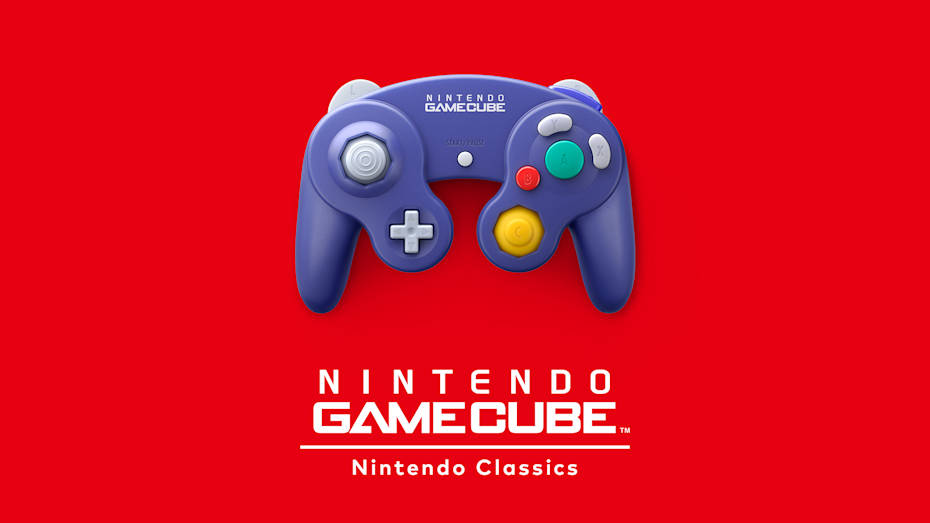
Chibi-Robo is one of Nintendo’s long neglected games and while it technically has two sequels, most fans agree, they are nowhere near as good as the original. The original game is one of many GameCube games that we have not seen since release and because of this many people have been left wondering if we would ever see them again. Nintendo curved this sentiment with the addition of GameCube games to their NSO service, however, and since then things have been looking up but personally, it wasn’t until the release of Chibi-Robo that I realized we could be in for a big change.
Chibi-Robo is a game that has been notoriously forgotten by Nintendo and in some ways it is understandable as the game sold just over 150,000 units in Japan and even less in other territories. The game spawned two sequels neither of which did very well commercially. So it was pretty surprising when the game was announced for Nintendo’s online service. But is this merely a coincidence, or will there be other rare games on the service? The only way to answer this is to look to the original announcement trailer for the GameCube NSO addition.

The trailer shows several titles that have not yet come to the service. These titles are Mario Sunshine, Fire Emblem: Path Of Radiance, Pokemon XD, Luigi’s Mansion and Pokemon Colosseum. The titles I would like to focus on are the two Pokemon games and Fire Emblem. I would like to look at the monetary value (In USD) of these titles and therefore thier relative accessibility.
Starting with Fire Emblem, the loose value (Just the disc in playable condition) is around $130 and the complete in box (CIB) is around $180. This is not a very accessible game. Pokemon XD has a similar price around $130 for the loose and $190 for the CIB. Again not super accessible. Lastly Colosseum has a relatively low $90 loose and $140 CIB. Slightly more accessible. Due to these statistics I would say that, as a whole, this service could be an amazing sign for game preservation.
The Conclusion
While you may not like having a service (NSO) be the way it is done. I believe that this is a great sign for video game preservation as a whole. There is no denying the fact that some of the games coming to the service are very expensive and that this is a way to both curve the cost for the consumer (not having to buy old things) and preserve our fondest games. While it is not perfect NSO seems to be good for the future of game preservation.
Credits
- Wikipedia – https://en.wikipedia.org/wiki/Chibi-Robo!
- Pricecharting.com – https://www.pricecharting.com/
- Nintendo – https://www.nintendo.com/us/store/products/nintendo-gamecube-nintendo-classics-switch-2/?srsltid=AfmBOoovZl1-7Ld6hDBKblnURWRAYRC7MB-tIiGSKRxOWzAyRUmk__fc
Written by – Jonathan Bailey


